No products in the cart.
23
Nov

How to Put On a Wedding Veil: A Bride’s Guide to Placement and Secure Styling
Choosing the perfect wedding veil is an exciting part of creating your bridal look, but knowing how to put it on correctly is just as important. Whether you have chosen a delicate one-tier veil, a romantic two-tier design with a blusher, or a dramatic cathedral veil, the right placement and secure attachment will help you feel comfortable and confident throughout your wedding day.
A veil should complement your hairstyle, stay in place during the ceremony and photographs, and be easy to remove when you are ready to enjoy the celebration. Here is what every bride should know about putting on and securing a wedding veil.
When Should You Put Your Wedding Veil On?
A wedding veil is usually one of the final accessories to be added after your hairstyle, makeup and wedding dress are complete.
If possible, ask your hairstylist to plan the veil placement during your hair trial. This gives you an opportunity to see how the fastening works with your hairstyle, whether additional pins are needed and how the veil falls from the back of your head.
It is also helpful to bring your actual veil to the hair trial rather than relying only on a photograph. Different combs, fabrics and veil weights may require different placement techniques.
How to Attach a Wedding Veil with a Comb
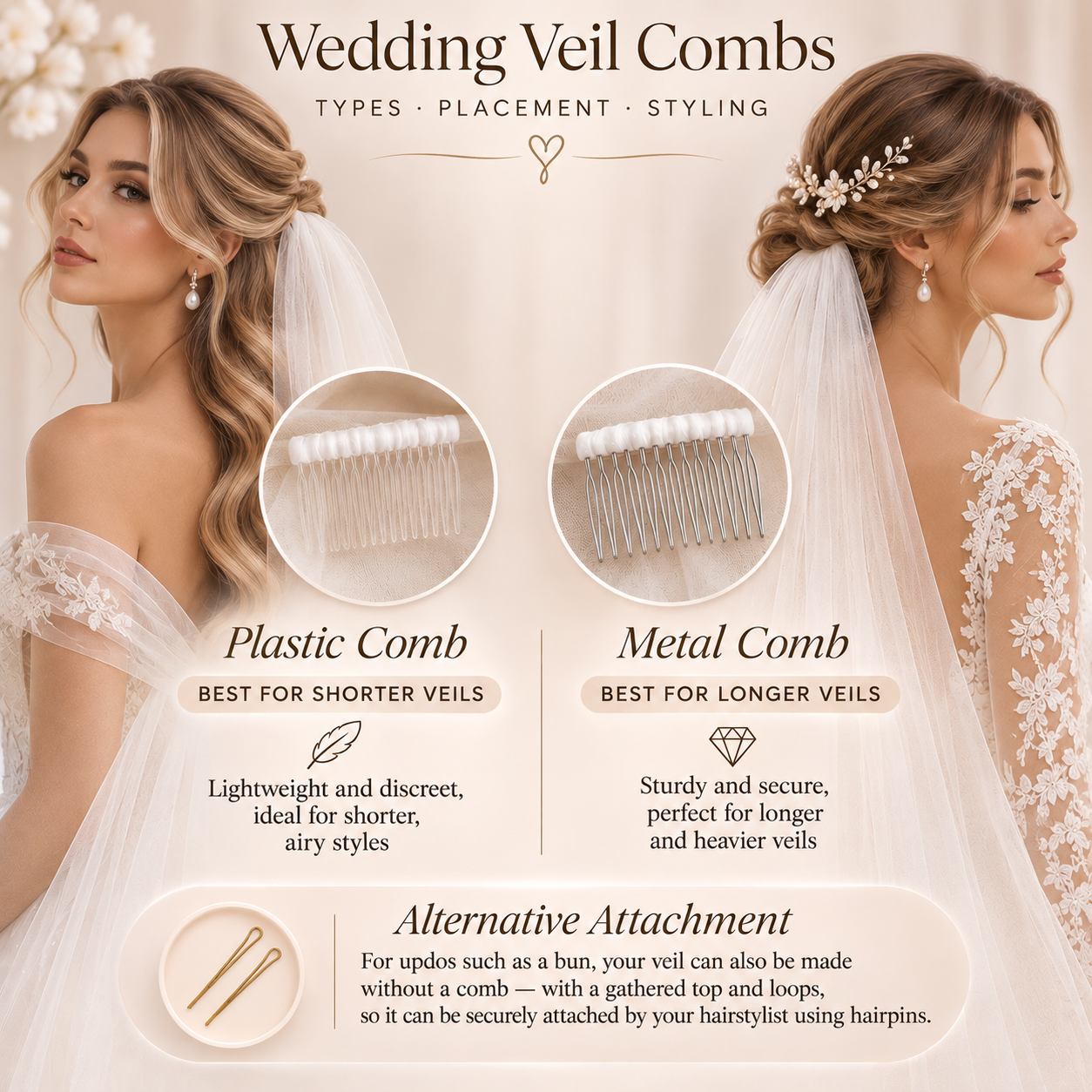
Many wedding veils come with a sewn-in comb designed to hold the tulle securely in your hair. Wedding veil combs are generally made of two materials: plastic and metal. The choice often depends on the length and weight of the veil.
Plastic Combs for Short Wedding Veils
Plastic combs are most commonly used for shorter, lightweight wedding veils. They provide a simple fastening option for designs that do not require as much support.
Metal Combs for Long Wedding Veils
Metal combs are generally used for longer wedding veils, especially designs that need more support because of their length and weight. They offer a sturdy fastening option for longer styles.
The comb is usually attached near the top of the veil and can be positioned at different points depending on the hairstyle and the look you want.
Follow these general steps:
- Decide on the placement. A veil can sit at the crown of your head, slightly below an updo or farther back for a softer silhouette.
- Prepare the hairstyle. Your hairstylist may create a small section of secured hair, braid or textured base to give the comb a better grip.
- Position the comb. Gently slide the comb into the hair, following the direction that allows it to sit naturally and securely.
- Add extra support if needed. Bobby pins can help secure the comb, especially with heavier or longer veils.
- Check the fall of the tulle. Make sure the veil hangs evenly and does not pull on your hairstyle.
The exact technique depends on the comb construction, hair texture and hairstyle. Your hairstylist can show you the safest way to attach your particular veil.
How to Wear a Wedding Veil with Different Hairstyles
The best veil placement depends on the hairstyle you choose. Some hairstyles provide a natural base for the comb, while others may need additional support.
Low Bun or Chignon
A low bun is a beautiful option for brides who want a classic and elegant look. However, many brides with a bun prefer to order their veil without a traditional comb.
Instead, the veil can be made with a gathered top and fastening loops. This allows the hairstylist to attach the veil directly to the hairstyle using bobby pins or hairpins. It is a popular option when the bride wants the veil to sit close to the bun and blend naturally into the hairstyle.
High Bun or Updo
A high updo creates an elegant silhouette and offers several placement possibilities. A veil can be attached above or below the bun, depending on the desired look. Your hairstylist can decide whether a comb or a gathered fastening with loops will work best.
Loose Waves
If you are planning to wear your hair down, ask your hairstylist to create a secure attachment point. A small braid or carefully secured section of hair may help support the comb.
Half-Up Hairstyle
Half-up hairstyles are a versatile choice for brides who want to show off their hair while wearing a veil. The secured section at the back can provide a convenient place for the comb or another suitable fastening.
How to Keep a Long Wedding Veil Secure
Long wedding veils, especially chapel and cathedral styles, can require additional support because of their length and fabric weight.
Before the ceremony, ask your hairstylist to check that the fastening is secure and that the veil does not pull uncomfortably on your hair.
A few practical considerations can help:
- Choose a hairstyle that provides a stable base for the fastening.
- Discuss additional pins or support with your hairstylist.
- Check that the veil is balanced and falls evenly behind you.
- Ask someone to help arrange the train before walking down the aisle.
- Practise moving, turning and walking with the veil before the wedding day.
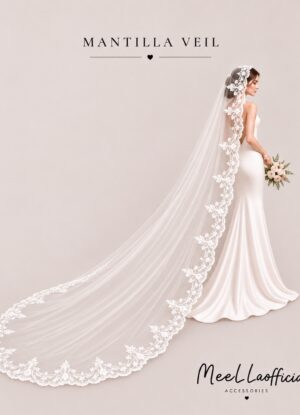
If you have chosen a dramatic long design, such as a cathedral wedding veil, it is especially important to test the placement and movement during your hair trial.
How to Wear a Two-Tier Wedding Veil with a Blusher
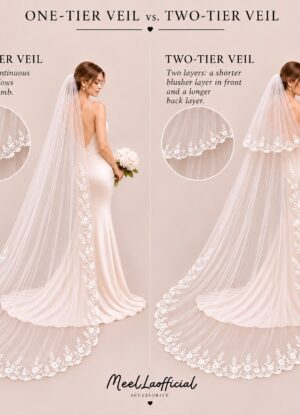
A two-tier wedding veil offers two layers of tulle, often including a shorter front layer known as a blusher. The blusher can be worn over the face during the ceremony and lifted back afterward.
To create this look, the fastening is usually positioned so that both layers fall naturally. The shorter layer should be easy to bring forward without disturbing the hairstyle or pulling on the longer back layer.
Before the wedding, practise moving the blusher forward and lifting it back. This is particularly useful if someone else will be lifting the veil during the ceremony.
You can explore different designs in our two-tier wedding veil collection.
Can You Wear a Wedding Veil with a Tiara or Hair Accessories?
Yes. A wedding veil can be styled with a tiara, hair comb, pearl pins or other bridal accessories. The key is to plan the placement of each piece so that they do not compete for space or make the hairstyle uncomfortable.
If you are wearing a tiara, your hairstylist can determine whether the veil comb should sit behind or beneath it. Smaller hair accessories can be placed around the hairstyle to complement the veil without overcrowding the look.
It is usually best to bring all your accessories to the hair trial so the stylist can arrange them together.
What If Your Wedding Veil Does Not Have a Traditional Comb?
Not every bridal veil needs to be attached in the same way. The best fastening depends on the veil design, its length, the hairstyle and the bride’s preferences.
For example, a veil can be made without a comb, with a gathered top and fastening loops. This option is especially suitable for brides planning a bun, as the hairstylist can attach the veil directly to the hairstyle using hairpins.
Other designs may use a plastic or metal comb, depending on the style and the support required. Bridal cape veils and draped wedding veils may also have different fastening solutions, such as shoulder attachments.
At MeeLLaOfficial, we understand that every bride and hairstyle is different. We are happy to discuss your ideas, listen to your preferences and create a wedding veil with the fastening that works best for you. Whether you prefer a plastic comb, a metal comb, a gathered top with loops or another suitable attachment, we are open to discussing different options.
If you already know how you plan to wear your hair, you can share your hairstyle inspiration with us when ordering. This helps us prepare a veil that complements your bridal look and makes styling easier on your wedding day.
How to Remove Your Wedding Veil Without Damaging Your Hairstyle
Many brides choose to remove their veil after the ceremony or photographs while keeping the hairstyle for the reception.
Ask your hairstylist or a trusted helper to show you how to remove the comb safely. Hold the base of the comb and gently release any supporting pins before sliding it out. Avoid pulling the tulle or dragging the comb through your hair.
If the veil is secured with several pins, remove them one at a time rather than pulling everything out at once.
Practising this before the wedding can make the transition from ceremony to reception much easier.
Plan Your Veil Before the Wedding Day
The perfect wedding veil should feel like a natural part of your bridal look. Its placement, fastening and overall weight should work with your hairstyle, dress and wedding plans.
At MeeLLaOfficial, you can explore different veil styles, lengths, fabrics and decorative details, including lace, pearls, beads and embroidery. We can also create a veil with a fastening tailored to your preferred hairstyle and styling ideas.
Take your veil to your hair trial, practise attaching and removing it, and make sure everything feels comfortable before the big day. With a little preparation, you can walk down the aisle knowing your veil looks beautiful and stays securely in place.